Showing posts with label Book: Tales of the Sun. Show all posts

Tuesday, January 13, 2015

The Brahman’s Wife and the Mungoose

This story is from Tales of the Sun or Folklore of Southern India by Georgiana Kingscote and Natesa Sastri (1890); online text.

Note: This story is found all over the world, most famous in the Welsh tale of Beth Gelert. Dan Ashliman has collected many variants, including the Indian story of the mongoose, here: Llewellyn and His Dog Gellert and other folktales of Aarne-Thompson-Uther type 178A.


Story of the Brahman’s Wife and the Mungoose

On the banks of the Ganges, which also flows by the most holy city of Banaras, there is a town named Mithila, where dwelt a very poor Brahman called Vidyadhara. He had no children, and to compensate for this want, he and his wife tenderly nourished in their house a mungoose—a species of weasel. It was their all in all—their younger son, their elder daughter—their elder son, their younger daughter, so fondly did they regard that little creature.


The god Visvesvara and his spouse Visalakshi observed this and had pity for the unhappy pair; so, by their divine power they blessed them with a son. This most welcome addition to their family did not alienate the affections of the Brahman and his wife from the mungoose; on the contrary, their attachment increased, for they believed that it was because of their having adopted the pet that a son had been born to them. So the child and the mungoose were brought up together, as twin brothers, in the same cradle.

It happened one day, when the Brahman had gone out to beg alms of the pious and charitable, that his wife went into the garden to cull some pot-herbs, leaving the child asleep in his cradle, and by his side the mungoose kept guard. An old serpent, which was living in the well in the garden, crept into the house and under the cradle, and was beginning to climb into it to bite the child when the mungoose fiercely attacked it and tore it into several pieces, thus saving the life of the Brahman’s little son, and the venomous snake, that came to slay, itself lay dead beneath the cradle.

Pleased at having performed such an exploit, the mungoose ran into the garden to show the Brahman’s wife its blood-smeared mouth, but she rashly mistook the deliverer of her child for his destroyer, and with one stroke of the knife in her hand with which she was cutting herbs she killed the faithful creature, and then hastened into the house to see her dead son.

But there she found the child in his cradle alive and well, only crying at the absence of his little companion, the mungoose, and under the cradle lay the great serpent cut to pieces. The real state of affairs was now evident, and the Brahman presently returning home, his wife told him of her rash act and then put an end to her life. The Brahman, in his turn, disconsolate at the death of the mungoose and his wife, first slew his child and then killed himself.

Thursday, January 8, 2015

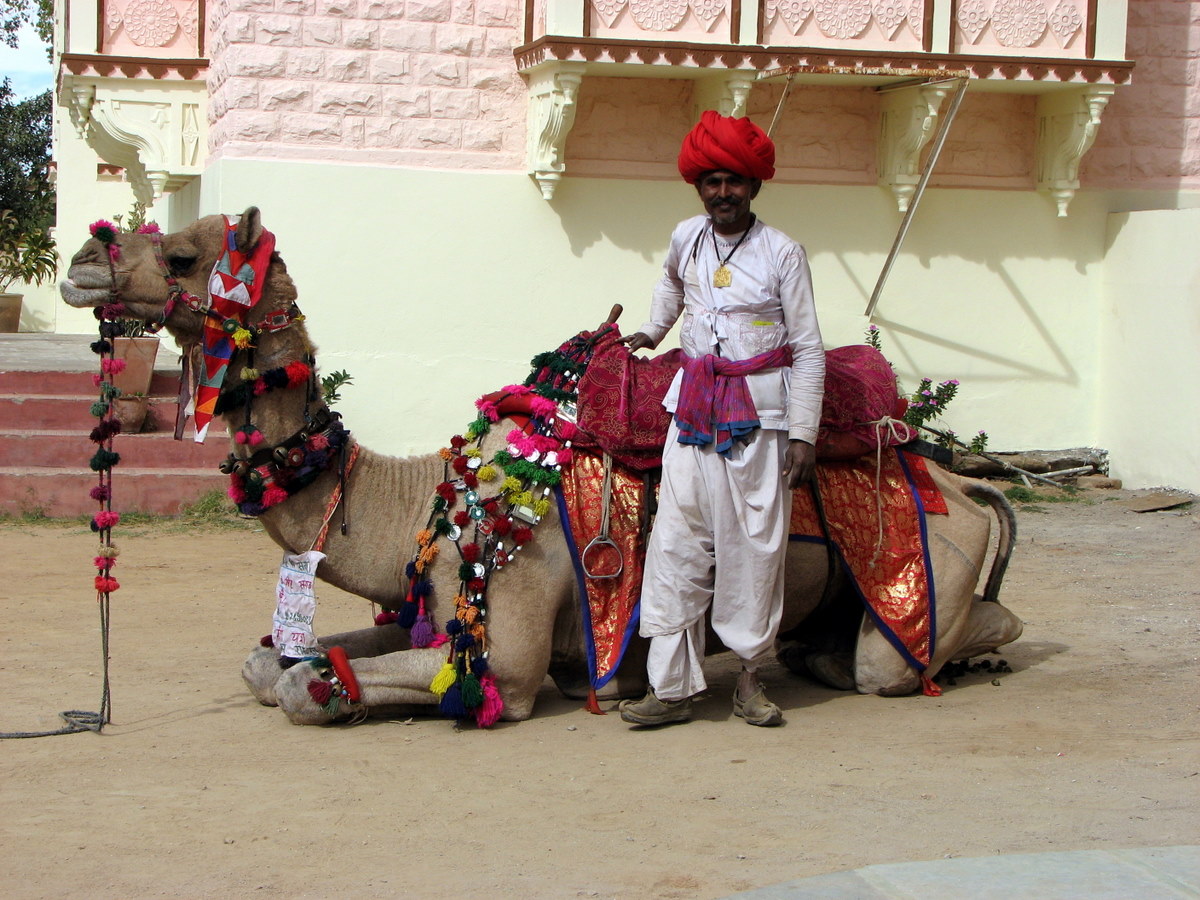
The Lost Camel

This story is from Tales of the Sun or Folklore of Southern India by Georgiana Kingscote and Natesa Sastri (1890).

Note: The pagodas referred to in thi story are a gold coin issued by medieval kings in southern India, and then later by the British, French, and Dutch in India. You can find out more at Wikipedia.

(Gold Pagoda coin cast in Pondicherry, India, 18th-century)


The Lost Camel

There was a city called Alakapuri, famous for all the riches that sea and land can yield, and inhabited by people speaking different languages. In that city reigned a king named Alakesa, who was a storehouse of all excellent qualities. He was so just a king that during his reign the cow and the tiger amicably quenched their thirst side by side in the same pond, the cats and the rats sported in one and the same spot, and the kite and the parrot laid their eggs in the same nest, as though they were “birds of a feather.” The women never deviated from the path of virtue, and regarded their husbands as gods. Timely rain refreshed the soil, and all Alakesa’s subjects lived in plenty and happiness. In short, Alakesa was the body, and his subjects the soul of that body, for he was upright in all things.

Now there was in Alakapuri a rich merchant who lost a camel one day.


He searched for it without success in all directions, and at last reached a road which he was informed led to another city, called Mathurapuri, the king of which was named Mathuresa.

King Mathuresa had under him four excellent ministers, whose names were Bodhaditya, Bodhachandra, Bodhavyapaka, and Bodhavibhishana. These four ministers, being, for some reason, displeased with the king, quitted his dominions, and set out for another country.

As they journeyed along they observed the track of a camel, and each made a remark on the peculiar condition of the animal, judging from the footsteps and other indications on the road.

Presently they met the merchant who was searching for his camel, and, entering into conversation with him, one of the travellers inquired if the animal was not lame in one of its legs; another asked if it was not blind of the right eye; the third asked if its tail was not unusually short; and the fourth inquired if it was not suffering from colic. They were all answered in the affirmative by the merchant, who was convinced that they must have seen the animal and eagerly demanded where they had seen it. They replied that they had seen traces of the camel, but not the camel itself, which being inconsistent with the minute description they had given of it, the merchant accused them of having stolen the beast and immediately applied to king Alakesa for redress.

On hearing the merchant’s story, the king was equally impressed with the belief that the travellers must know what had become of the camel and, sending for them, threatened them with his displeasure if they did not confess the truth. How could they know, he demanded, that the camel was lame or blind, or whether the tail was long or short, or that it was suffering from any malady, unless they had it in their possession?

In reply, they each explained the reasons which had induced them to express their belief in these particulars.

The first traveller said, “I noticed in the footmarks of the animal that one was deficient, and I concluded accordingly that it was lame of one of its legs.”

The second said, “I noticed that the leaves of the trees on the left side of the road had been snapped or torn off, whilst those on the right side were untouched, whence I concluded that the animal was blind of his right eye.”

The third said, “I saw some drops of blood on the road, which I conjectured had flowed from the bites of gnats or flies, and I thence concluded that the camel’s tail was shorter than usual, in consequence of which he could not brush the insects away.”

The fourth said, “I observed that while the forefeet of the animal were planted firmly on the ground the hind ones appeared to have scarcely touched it, whence I guessed that they were contracted by pain in the belly of the animal.”

When the king heard their explanation he was much struck by the sagacity of the travellers, and giving five hundred pagodas to the merchant who had lost the camel; he made the four young men his principal ministers, and bestowed on each of them several villages as free gifts.